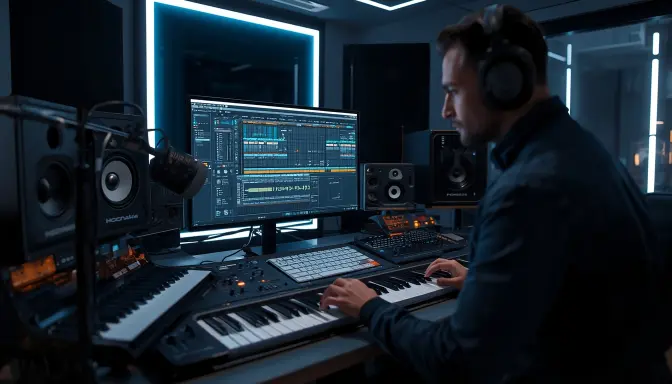
Music technology is moving fast. A few years ago, producing professional-sounding music often meant having access to an expensive studio, specialist equipment and a lot of technical knowledge. Today, an artist with a decent laptop, headphones and the right software can build an impressive setup from almost anywhere.
That is what makes Music Technology so interesting in 2026. The biggest changes are not simply about making music louder or adding more effects. They are changing how artists create, experiment, collaborate and finish their work.
Music technology
AI Is Becoming a Practical Studio Assistant
Artificial intelligence has become one of the biggest developments in Music Technology, but its most useful applications may be less dramatic than people expect.
Instead of asking AI to create an entire song, many artists are using it for specific parts of their workflow. AI-powered tools can help with vocal editing, stem separation, mastering, sound design, transcription and generating ideas.
A 2026 survey of music creators found that many producers who use AI are particularly interested in practical tasks such as vocal tuning, drum editing and file management. Sound On Sound
That distinction is important.
For a producer, spending less time cleaning up a recording can mean more time actually making music. AI does not necessarily have to replace the creative process. Sometimes, it can simply remove some of the boring parts.
Smarter DAWs Are Changing Production
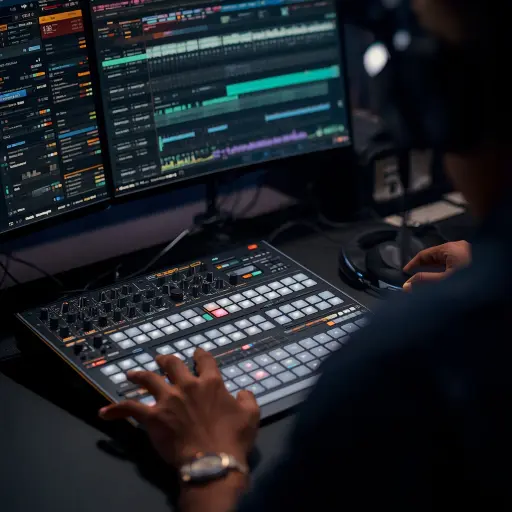
Digital audio workstations are also becoming more intelligent.
Modern platforms are introducing features that can recognise instruments, separate audio into stems, convert audio into MIDI information and help creators work with chords and melodies.
Universal Audio’s LUNA 3.0, for example, introduced features including stem separation, audio-to-MIDI and chord extraction. Its newer workflow tools are designed to make recording and developing ideas faster.
This matters because inspiration does not always arrive at a convenient time.
An artist might suddenly come up with a melody while travelling or record a rough vocal idea on a phone. The easier it becomes to turn that idea into something usable, the less likely it is to disappear.
Immersive Audio Is Opening New Possibilities
Another major area of Music Technology is immersive audio.
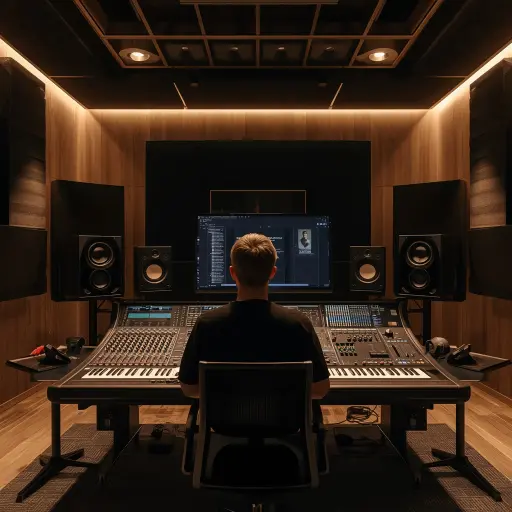
Instead of limiting music to a traditional left-and-right stereo image, formats such as Dolby Atmos and other spatial-audio technologies allow sounds to be positioned around the listener.
Apple Music has continued supporting Spatial Audio with Dolby Atmos, giving artists another format through which they can present their work. Apple Music for Artists
For listeners, this can make music feel more spacious and detailed. For producers, it introduces another creative layer.
Of course, not every song needs an immersive mix. But as more headphones, phones, cars and streaming platforms support spatial audio, it is becoming a technology worth understanding.
Hardware Is Getting Smarter Too
The changes are not limited to software.
Modern music hardware is increasingly combining traditional instruments with digital technology. Samplers, grooveboxes, controllers and synthesizers are becoming more powerful while remaining relatively compact.
Some newer devices are even experimenting with local AI capabilities for sound manipulation and creative experimentation.
That could be particularly useful for independent artists who do not have access to large studios. A compact setup can now handle jobs that previously required several pieces of equipment.
What These Breakthroughs Mean for Artists
The most useful Music Technology breakthroughs are not necessarily the ones with the biggest headlines.
They are the tools that help artists:
- Develop ideas faster
- Spend less time on repetitive tasks
- Experiment with unfamiliar sounds
- Collaborate remotely
- Create immersive mixes
- Produce from smaller spaces
There is also a downside. New technology can create information overload. Every few weeks, there seems to be another AI tool, plugin or piece of hardware claiming to change music forever.
Artists do not need all of them.
The smarter approach is to identify the parts of the creative process that are slowing you down and find technology that genuinely solves those problems.
That, more than anything, is where Music Technology is heading: not replacing the artist, but giving the artist more ways to turn an idea into something real.